

Importing personal protective equipment (PPE) from China can be highly profitable when done correctly. However, even experienced importers make costly mistakes that can lead to shipment delays, product recalls, financial losses, and damage to your business reputation.
In this comprehensive guide, we’ll reveal the 7 most expensive mistakes importers make when sourcing PPE from China in 2026, based on our 10+ years of experience serving clients across Europe, Australia, Africa, and the Middle East. More importantly, we’ll provide practical solutions to help you avoid these pitfalls and build a reliable supply chain.
Mistake #1: Choosing the Cheapest Supplier Without Verifying Quality
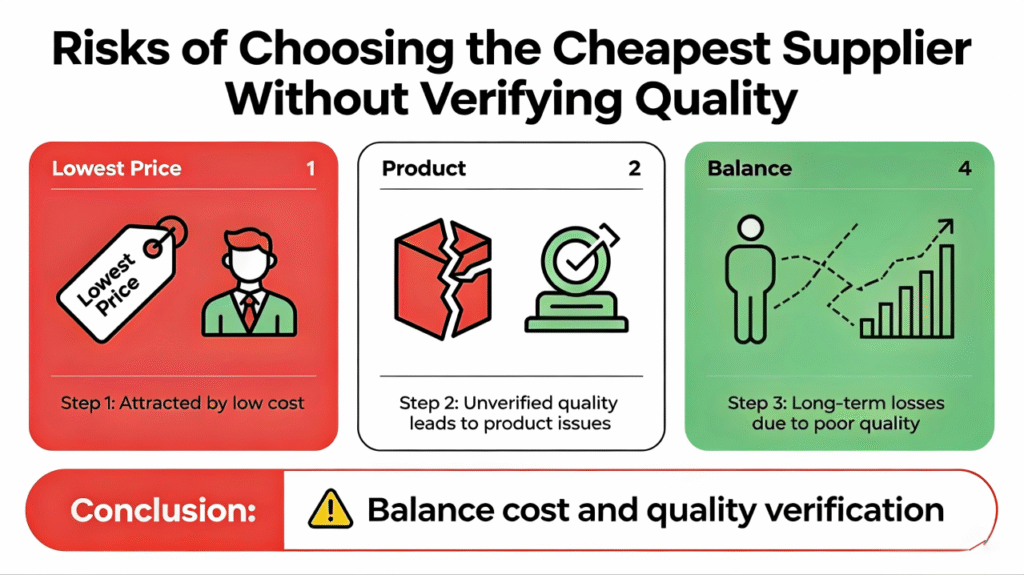
The Problem: This is the single most common and costly mistake importers make. A quote that is 20-30% below the market average almost always signals a quality compromise. Unscrupulous suppliers cut corners by:
- Using recycled materials instead of virgin polypropylene
- Reducing fabric weight and thickness
- Skipping critical testing procedures
- Using inferior stitching and sealing techniques
Real-World Cost: A European distributor once saved €5,000 on a container of nitrile gloves by choosing the cheapest supplier. When the shipment arrived, 40% of the gloves tore during use, leading to a full product recall that cost over €85,000 in returns, shipping, and lost customer trust .
How to Avoid:
- Get at least 3 detailed quotations from verified suppliers
- Compare specifications side-by-side (material type, weight, thickness, certifications)
- Never sacrifice safety standards for price
- Request pre-production samples and test them thoroughly
- Remember: The cheapest price often becomes the most expensive in the long run
HygieaMed Advantage: We provide transparent pricing based on genuine quality materials and rigorous testing. Our quotes include all necessary certifications and quality control checks, with no hidden costs.
Mistake #2: Falling for Fake or Outdated Certifications

The Problem: Fake CE, ISO, and other certifications are rampant in the PPE industry. In 2026, EU customs authorities have significantly enhanced their detection systems, making fake certificates almost impossible to get through.
Common certification scams include:
- “China Export” CE marks (not legally valid)
- Certificates issued by unaccredited bodies
- Expired certificates with altered dates
- Certificates for different products or models
- Test reports misrepresented as full certifications
Real-World Cost: A Middle Eastern importer had an entire container of surgical gowns seized by Saudi customs because the CE certificate was fake. The goods were destroyed, and the importer was fined SAR 250,000 (approximately €61,000).
How to Avoid:
- Verify all certificates directly with the issuing body (SGS, TÜV, BSI, etc.)
- Check the NANDO database for EU notified bodies
- Ensure the certificate matches the exact product model and standard
- Request the full technical documentation (not just a certificate image)
- Work with suppliers who can provide original, verifiable certifications
HygieaMed Advantage: All our products hold genuine, up-to-date CE, ISO 13485, and other relevant certifications. We provide full technical files and can assist with verification processes for your market.
Mistake #3: Skipping Pre-Shipment Inspections

The Problem: Many importers trust suppliers to self-inspect their products or accept photos as proof of quality. However, the perfect sample you received may not match the bulk production.
Common issues found during inspections:
- Material substitutions
- Incorrect sizing or dimensions
- Poor stitching and sealing
- Defective packaging
- Missing labels or incorrect labeling
Real-World Cost: An Australian distributor received 50,000 face masks that were supposed to be EN 14683 Type IIR. During pre-shipment inspection, it was discovered that the masks only met Type I standards. The supplier agreed to rework the order, but the delay cost the distributor a major hospital contract worth AUD 120,000.
How to Avoid:
- Always arrange for a third-party inspection before shipment
- Specify clear acceptance criteria in your contract
- Inspect at least 10-15% of the production batch
- Hold final payment until the inspection report is approved
- Work with suppliers who welcome independent inspections
HygieaMed Advantage: We conduct three internal quality checks during production and provide a detailed inspection report before shipment. We also welcome third-party inspections from any accredited agency at our factories.
Mistake #4: Not Understanding Target Market Regulations
The Problem: Different markets have different regulatory requirements for PPE. Assuming that a product certified for one market will be acceptable in another is a common mistake.
For example:
- Europe requires CE marking under MDR (medical) or PPE Regulation (industrial)
- Australia requires TGA registration for medical devices
- Africa requires COC (Certificate of Conformity) for most countries
- Middle East requires SASO/GSO certification for Gulf countries
Real-World Cost: A South African importer ordered medical gloves with CE certification but failed to obtain the required COC certificate. The shipment was held at Durban port for 6 weeks, incurring demurrage charges of over ZAR 180,000 (approximately €8,500).
How to Avoid:
- Research all regulatory requirements for your specific market
- Confirm that your supplier understands and can meet these requirements
- Include compliance clauses in your purchase contract
- Work with suppliers who have experience exporting to your target market
- Consult with local regulatory experts if needed
HygieaMed Advantage: We have extensive experience exporting to Europe, Australia, Africa, and the Middle East. We can provide guidance on all regulatory requirements and assist with obtaining necessary certifications for your market.
Mistake #5: Poor Planning for Shipping and Logistics

The Problem: Many importers underestimate the complexity of international shipping and fail to plan for potential delays. In 2026, port congestion, container shortages, and peak season disruptions continue to affect global supply chains.
Common shipping mistakes:
- Not accounting for Chinese New Year shutdowns (February 15-23, 2026)
- Booking shipping too late during peak seasons
- Choosing the wrong shipping method for your timeline
- Not purchasing cargo insurance
- Failing to prepare proper documentation
Real-World Cost: A German distributor placed an order in late January 2026 without considering the Chinese New Year shutdown. Production was delayed by 4 weeks, and shipping took an additional 3 weeks due to port congestion. The distributor ran out of stock and lost approximately €45,000 in sales.
How to Avoid:
- Plan your orders at least 3-4 months in advance
- Build buffer time into your delivery schedule (especially for peak seasons)
- Book shipping as early as possible
- Purchase comprehensive cargo insurance
- Work with a reliable freight forwarder experienced in PPE shipments
HygieaMed Advantage: We offer flexible production scheduling and can help you plan around peak seasons and holidays. We also work with trusted logistics partners to ensure timely delivery and provide end-to-end shipment tracking.
Mistake #6: Inadequate Contract Terms and Payment Protection

The Problem: Many importers use generic purchase orders that don’t adequately protect their interests. This can lead to disputes over quality, delivery times, and specifications.
Common contract issues:
- Vague product specifications
- No clear quality standards
- No penalty clauses for late delivery
- Unfavorable payment terms
- No dispute resolution mechanism
Real-World Cost: A Kenyan importer paid a 50% deposit for a container of isolation gowns. The supplier delivered 2 weeks late and the gowns did not meet the agreed specifications. Since there was no penalty clause in the contract, the importer had no leverage and was forced to accept the defective goods at a discount.
How to Avoid:
- Use a detailed purchase contract with clear specifications
- Include acceptance criteria based on international standards
- Add penalty clauses for late delivery and non-compliance
- Use secure payment terms (e.g., 30% deposit, 70% against inspection)
- Consider using a letter of credit for large orders
HygieaMed Advantage: We use clear, fair contracts that protect both parties. Our standard payment terms are 30% deposit, 70% against inspection report and before shipment. We also offer flexible payment options for long-term partners.
Mistake #7: Not Building Long-Term Partnerships with Suppliers

The Problem: Many importers treat suppliers as disposable commodities, switching between them based on price. This approach often leads to inconsistent quality, poor service, and missed opportunities.
Benefits of long-term partnerships:
- Better pricing and payment terms
- Priority production during peak seasons
- More flexibility for custom orders
- Better communication and problem-solving
- Continuous quality improvement
Real-World Cost: A French distributor switched suppliers every 6 months to get the lowest price. Over 2 years, they experienced 3 quality issues, 5 delivery delays, and lost 2 major customers due to inconsistent product quality.
How to Avoid:
- Invest time in finding a reliable, trustworthy supplier
- Communicate your expectations clearly
- Provide feedback on product quality and service
- Be loyal to suppliers who consistently deliver
- Work together on continuous improvement initiatives
HygieaMed Advantage: We value long-term partnerships with our clients. We assign dedicated account managers to each customer, provide personalized service, and work closely with you to meet your specific needs. Many of our clients have been with us for over 5 years.
Conclusion
Importing PPE from China doesn’t have to be risky. By avoiding these 7 costly mistakes and working with a reliable supplier like HygieaMed, you can build a profitable and sustainable business.
The key to success is:
- Prioritizing quality over price
- Verifying all certifications and documentation
- Conducting pre-shipment inspections
- Understanding your target market regulations
- Planning ahead for shipping and logistics
- Using clear, fair contracts
- Building long-term partnerships with suppliers