

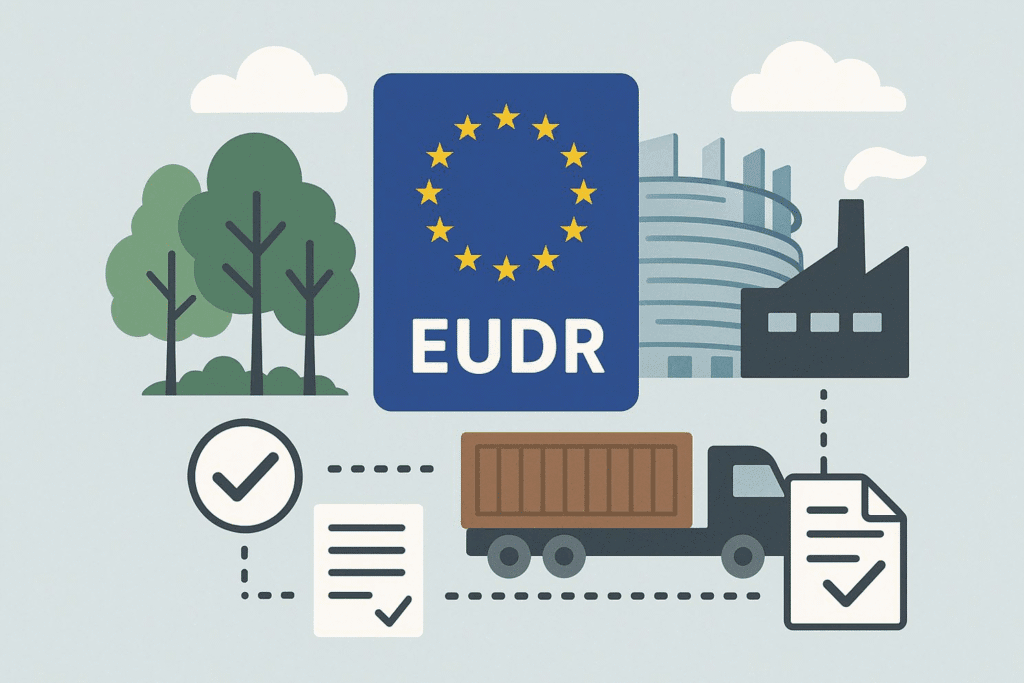
Deforestation and forest degradation threaten global climate stability, contributing ~11% of global greenhouse gas emissions (IPCC). The EU Deforestation-Free Regulation (EUDR), a key part of the EU Green Deal, was enacted on June 29, 2023, with full effect for medium/large enterprises on December 30, 2025, and a grace period until June 30, 2026 for micro/small enterprises (MSEs).
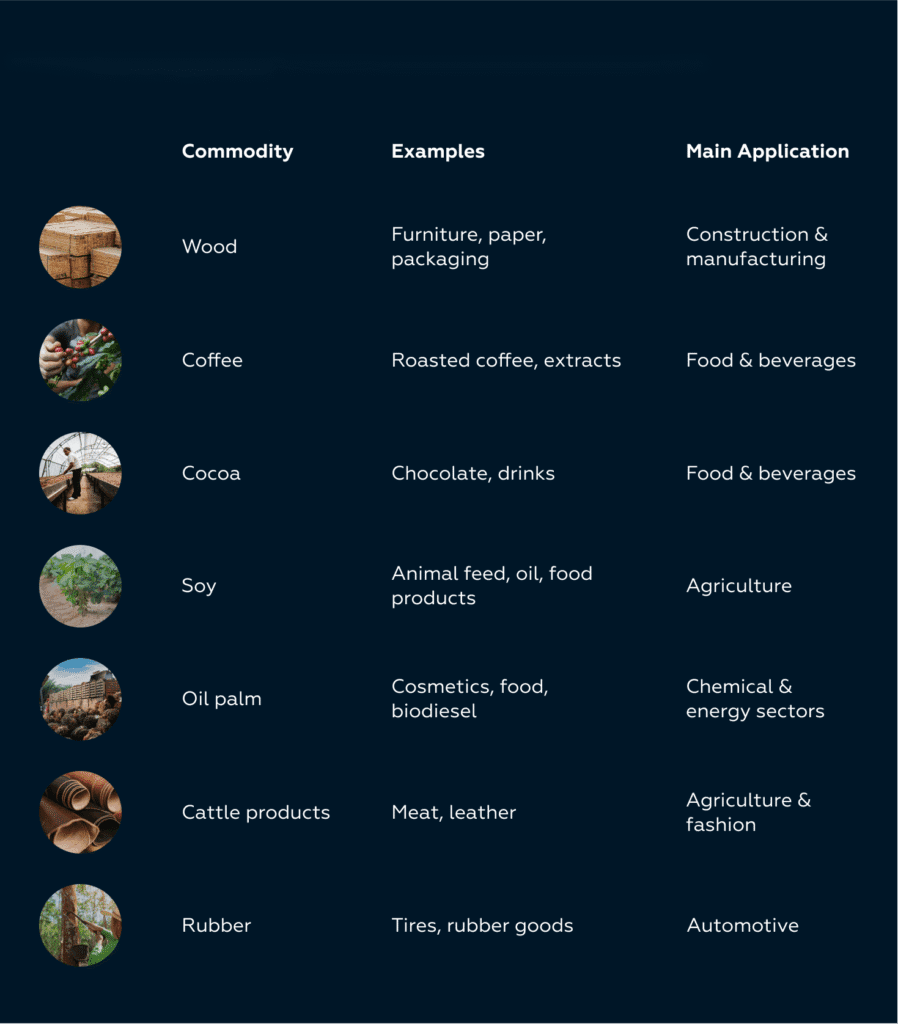
EUDR covers seven core deforestation-linked commodities: cattle, soy, palm oil, wood, coffee, cocoa, and natural rubber, as well as their derived products.
For European importers of disposable medical protective products (e.g., medical gloves, disposable underpads), the EUDR imposes specific compliance requirements due to the products’ reliance on deforestation-linked raw materials (natural rubber, wood pulp). This manual focuses on guiding EU importers to navigate EUDR compliance and ensure smooth market access for disposable medical protective products.
1. EUDR Background and Core Objectives for Disposable Medical Protective Products
Global deforestation is alarming: 420 million hectares (larger than the EU) were lost between 1990 and 2020, 90% due to agricultural expansion. The EU imports over €85 billion of deforestation-linked commodities annually, including natural rubber and wood pulp—key raw materials for disposable medical protective products.
Beyond environmental protection, the EUDR also emphasizes ethical production, requiring compliance with both EU regulations and the laws of raw material producing countries.
For disposable medical protective products, which are critical to public health, EUDR compliance has become a prerequisite for market access alongside existing medical device regulations (e.g., CE marking requirements under Regulation (EU) 2017/746) .
Its three core objectives are:
- Eliminate links between EU imports of disposable medical protective products and post-2020 deforestation, aligning with the Paris Agreement and UN SDG 15.2.
- Establish traceable supply chains for disposable medical protective products: Ensure raw materials (natural rubber, wood pulp) do not come from land deforested or degraded after December 31, 2020.
- Guide importers and upstream suppliers to build sustainable raw material sourcing systems, promoting green transformation in the medical protective product industry.
2. EUDR Core Framework and Key Requirements for Disposable Medical Protective Products
2.1 Scope of Application
The EUDR covers 7 core deforestation-linked commodities and their derivatives, two of which are critical for disposable medical protective products:
- Natural rubber (raw material for medical gloves)
- Wood pulp (raw material for disposable underpads, medical dressings).
This includes finished disposable medical protective products imported into the EU or produced within the EU (non-discrimination principle).
Importers must note that the EUDR scope is regularly updated, and they should monitor revisions related to medical product raw materials. Notably, EUDR compliance is independent of other medical device regulations—products eligible for CE marking do not automatically meet EUDR requirements.
2.2 Responsible Entities and Obligations
For disposable medical protective products, two main entities bear EUDR responsibilities, with obligations closely linked to medical product import procedures:
Operators (importers of disposable medical protective products):
As the primary responsible party, importers must conduct full-chain due diligence covering raw materials to finished products. Key obligations include:
- Verifying that natural rubber and wood pulp are from post-2020 deforestation-free land;
- Tracing raw materials to source plots with 6-decimal geolocation data;
- Assessing supply chain risks (e.g., raw material origin risks);
- Submitting a Due Diligence Statement (DDS) to EU authorities before placing products on the market;
- Retaining compliance records (including DDS, supplier audit reports, raw material traceability documents) for at least 5 years, which must be synchronized with medical device record-keeping requirements.
Traders (wholesalers, retailers of disposable medical protective products):
Rely on upstream importers’ due diligence results. Must obtain and retain the upstream DDS reference number; if upstream compliance information is incomplete, traders must assume supplementary due diligence obligations. For medical products supplied to hospitals and other public institutions, traders must additionally verify that the product’s EUDR compliance status meets public procurement requirements.
Obligations are scaled by enterprise size:
- Micro/small enterprises (MSEs, <50 employees, turnover ≤€10M): Simplified due diligence (e.g., streamlined traceability documentation) and a grace period until June 30, 2026.
- Medium/large enterprises: Full compliance obligations take effect on December 30, 2025, with no grace period. For importers supplying large public medical institutions, compliance should be prioritized regardless of enterprise size due to strict public procurement audits.
2.3 Risk Classification and Enforcement
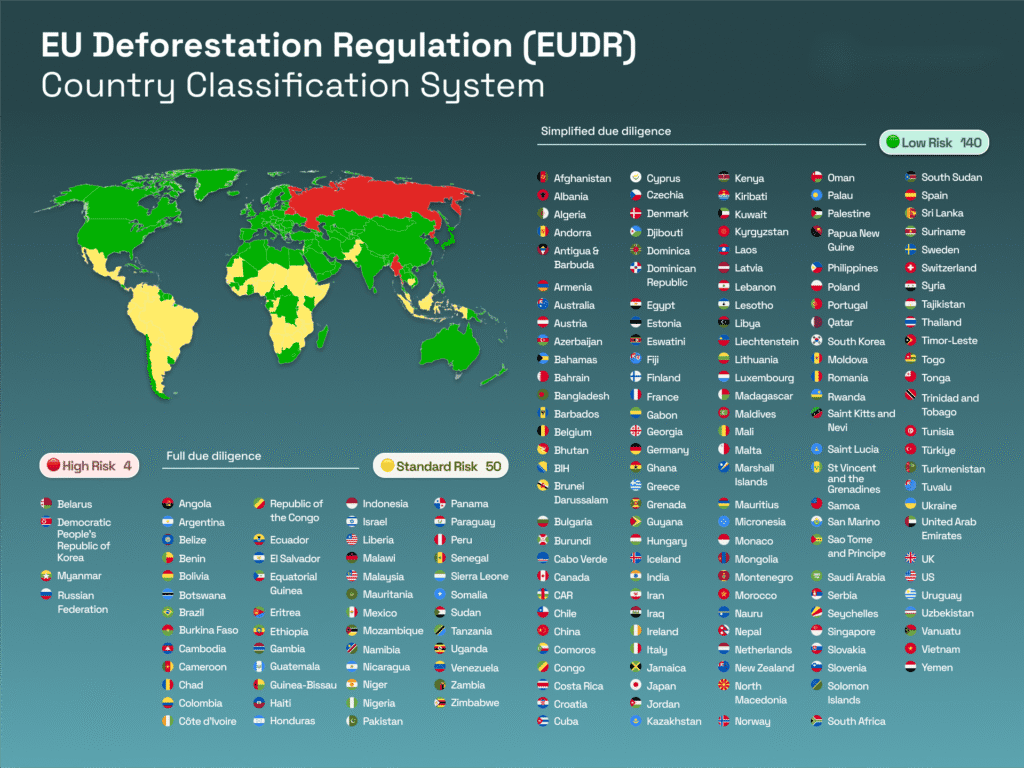
In May 2025, the EU released a national risk list (3 tiers) that directly affects the due diligence intensity for disposable medical protective product importers:
- Low-risk (e.g., China, US, Canada, EU member states): Only basic information collection is required. For importers of Chinese disposable medical protective products, this means 1% annual inspection rate, significantly reducing compliance costs. Basic information includes supplier’s EUDR compliance letter, DDS reference number, and raw material origin certification.
- Standard-risk (e.g., Brazil, Indonesia, Malaysia, Colombia): Moderate scrutiny (≥3% operator inspections). If importing disposable medical protective products with raw materials from these countries (e.g., natural rubber from Indonesia), importers must conduct enhanced due diligence, such as third-party on-site verification of rubber plantations.
- High-risk (e.g., Belarus, Russia, Myanmar): Full due diligence and ≥9% inspections. Importers are advised to avoid sourcing raw materials for disposable medical protective products from these countries, as non-compliance risks are extremely high.
Enforcement is strict for disposable medical protective products, with penalties directly affecting market access:
- Fines up to 4% of annual turnover;
- Product seizure and destruction;
- 12-month EU market ban;
- Disqualification from public procurement (a critical sales channel for medical products).
EU member states have designated competent authorities (e.g., Netherlands’ NVWA) to conduct targeted inspections of medical product importers. Importers must coordinate with these authorities to provide required compliance documents in a timely manner.
3. Impacts of EUDR on European Importers of Disposable Medical Protective Products
3.1 Core Impacts on Importers
EUDR compliance has become a mandatory requirement for European importers of disposable medical protective products, bringing both unique challenges and opportunities:
- Compliance Advantages for Sourcing from Low-Risk Countries (e.g., China): Importers sourcing from low-risk countries benefit from simplified due diligence and low inspection rates (1% annually). Traders only need to pass on upstream DDS reference numbers without submitting separate DDS, reducing administrative burdens. This makes Chinese disposable medical protective product suppliers more competitive in the EU market <superscript>2.
- Key Compliance Challenges:
- Raw material verification: Natural rubber (for gloves) and wood pulp (for underpads) must be post-2020 deforestation-free, requiring importers to obtain detailed traceability documents from suppliers (e.g., rubber plantation geolocation data, FSC-certified wood pulp certificates <superscript>4);
- Coordination with medical device regulations: EUDR compliance documents must be synchronized with CE marking, UDI registration, and other medical product requirements to avoid documentation conflicts;
- Small supplier management: Small and medium-sized upstream suppliers may lack traceability capabilities, requiring importers to provide guidance or adjust supplier portfolios.
- Supplier Selection Transformation: Importers are shifting from cost-focused short-term partnerships to long-term collaborations with suppliers having strong traceability systems. Key selection criteria include: Supplier’s EUDR compliance experience, raw material source verification capabilities, and ability to provide real-time data for EU audits.
- Critical Note: Disposable medical protective products are excluded from some EU EPR rules but not the EUDR. Non-compliance not only leads to market ban risks but also disqualification from public procurement—a core channel for medical products. Importers must integrate EUDR compliance into their overall medical product quality management systems.

4. Practical Compliance Strategies for European Importers
To ensure smooth market access for disposable medical protective products, European importers should adopt a proactive, medical-industry-specific compliance strategy:
1. EUDR Compliance Audit Checklist for Disposable Medical Protective Product Suppliers
- Basic Documents: Business license, medical device production qualification (e.g., NMPA cert for Chinese suppliers, CE cert if applicable), EUDR compliance letter, valid DDS reference number, and medical product quality management system certification (e.g., ISO 13485).
- Raw Material Traceability: 1) Natural rubber (for gloves): Geolocation data of source plantations (≥4 hectares), supply contracts, third-party deforestation verification reports; 2) Wood pulp (for underpads): FSC certification <superscript>4, origin proof, and segregation records to ensure no mixing with non-compliant pulp.
- Legal Compliance: 1) Compliance with environmental and forestry laws of the raw material producing country; 2) Alignment with EU medical device regulations (Regulation (EU) 2017/746) and EUDR requirements (no EPR exemptions); 3) No prior EUDR violations or medical product quality violations.
- Traceability Systems: Description of internal raw material-to-finished product tracking processes, 5-year record retention commitment, and ability to provide real-time data access for EU authorities and medical product audit institutions.
2. Targeted Supply Chain Mapping for Medical Products:
Focus on raw material links (natural rubber, wood pulp) to identify high-risk nodes. Build a compliant supplier whitelist, prioritizing suppliers with both medical device production qualifications (e.g., NMPA certification for Chinese suppliers) and EUDR compliance capabilities.
3. Adopt Medical Supply Chain-Friendly Digital Tools:
Use professional traceability platforms (e.g., TraceX) to automate supply chain mapping, risk scoring, and DDS reporting. Prioritize tools that can integrate with medical product inventory and quality management systems to achieve unified management of EUDR compliance and medical device regulatory data.
4. Leverage Preparation Time and Classify Compliance Priorities:
- Medium/large enterprises: Complete supplier audits and traceability system construction by December 30, 2025, focusing on high-risk raw material sources;
- MSEs: Use the grace period to build basic compliance capabilities, prioritizing core suppliers;
- All importers: Prioritize compliance for products supplied to public medical institutions to avoid losing key markets.
5. Strengthen Industry Collaboration and Policy Tracking:
- Join medical product industry consortia to share EUDR compliance best practices and supplier resources;
- Establish communication channels with EU competent authorities to timely grasp policy updates related to medical products;
- For resource-constrained SMEs, apply for government support for compliance capacity building.

5. Conclusion
For European importers of disposable medical protective products, EUDR compliance is no longer an option but a mandatory requirement for market access. While it increases upfront compliance costs and management burdens, it also helps importers build sustainable supply chains, enhance credibility among medical institutions, and gain a competitive edge in the EU’s sustainability-focused medical market. As the 2025 deadline approaches, importers must act quickly to:
- Integrate EUDR requirements into medical product import processes;
- Complete targeted supplier audits and raw material traceability verification;
- Establish integrated compliance management systems for medical regulations and EUDR.
Proactive compliance will not only ensure smooth market access but also lay a solid foundation for long-term development in the EU medical product market.